Since the election of Donald Trump, an internal debate has arisen in the liberal ranks over identity politics. Many liberals blame the exclusionary nature of identity politics for Hillary’s loss. The identities of identity politics all have a common enemy: the white male. Liberals found, to their surprise, that not every poor, working-class white male was willing to do public penance for their complicity in a system of economic and social oppression. Decades of attacking “whiteness” somehow turned off white voters. So liberals, like Mark Lilla, are calling for a shift to a more unified and positive vision. Others, however, still want to continue to disclose the boogiemen of bigotry. The future results of this debate are still difficult to predict.
Meanwhile, evangelical leaders are ramping up and doubling down on their work for racial social justice. Now there is the annual MLK50 conference, organized by The Gospel Coalition, in which no doubt the word “Trump” and “Jesus” will rival in mentions. Russell Moore at the ERLC, furthermore, seems to spend more time employing their “Gospel opposition” to 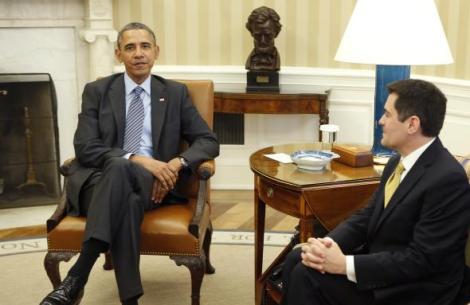 pro-White events, such as the White Lives Matter rally, than to anything else. All of this would be fine—I have no interest in supporting racial civil/social orders, and I never have—if there was any meaningful conversation on identity politics in evangelicalism. To my knowledge, there are no Mark Lillas in respectable evangelicalism calling out the leadership. This ought to strike everyone as odd, since over 80 percent of evangelicals voted for Trump. Despite all their moral denunciations and name-calling, the leaders had no effect on their alleged followers. While the liberal failure to persuade some white swing voters in key swing states has sparked an internal debate, evangelical leaders persuaded almost no one and there is no conversation. Such a colossal failure should place their status as leaders in question. But it hasn’t. They remain in their positions and continue to push the same failed strategy of divisive social justice.
The answers to why they remain in power and why they push a particular type of social justice are related. Identity politics, even in its milder forms, provides a concealed weapon—a rhetorical weapon—against adversaries, and it confers legitimacy, or at least the promise of legitimacy. Practicing identity politics provides rhetorical advantage and elevates one to a moral high-ground above others. It is a position of power—rhetorical power in which you can “boldly” and “courageously” denounce another who has no social-rhetorical standing to defend himself and thereby position yourself within the broader camp of social respectability.
Despite diving into the social current of justice du jour, evangelical leaders as “conservative” evangelicals can claim an outsider status. They are not joining the establishment itself, so they think; they simply have common opponents: “white nationalism,” “nativism,” “ethno-nationalism,” etc. That is, they are a sort of anti-anti-establishment. Still, by adopting the rhetoric and conferring “gospel-issue” status of whatever social justice issue the establishment is current harping on, they attain a social force and status of power over their “followers,” the regular evangelical. They receive certain benefits from the establishment while also distancing themselves from it. All this will become clearer with a discussion on the nature of identity politics.
Identity politics
Regardless of the political and policy goals of identity politics, identity politics is materially a restructuring of rhetorical privileges through the buttressing of the “I think…”, the speaker and the speaker’s beliefs, with prima facie plausibility on account of one’s racial, sexual, gender, etc. identity(ies). Put differently, identity politics is ensuring and insisting that particular people can effectively use an ‘as’ adjectival clause in their assertions: for example, “As a gay black man, I think…” The person’s argument gains not only prima facie plausibility; it places the person’s opponents on the defensive—i.e., throws him the burden of proof—by the attachment of an identity to the assertion. The interlocutor is forced to deny a gay black man’s assertion, not merely the assertion itself. The ‘as’ clause with certain identities has social-rhetorical force to it, placing the asserter in a distinct advantage over others. Only some groups have this rhetorical privilege.
The straight, white, “cis-gendered,” etc. person cannot use ‘as’ clause in their assertions, unless they are admitting to their own privilege. Indeed, to say “As a white person, I think…” is deemed racist. Unlike non-whites, white people cannot deploy their whiteness to support any truth claim, unless again it concerns their complicity in a system of oppression. Still, in a society charged with identity politics, white people always have an ‘as’ with all their truth-claims. When they speak, their assertions have prima facie implausibility (or at least less plausibility), on account of their white privilege. They have an implicit identity in every assertion: “(As a white man,) I think…” When identity politics reigns, rhetorical power is distributed unequally between the groups identified as “privileged” and those identified as “underprivileged.” White people (and other non-privileged groups, often with intersectional social categories) have a distinct rhetorical disadvantage.
For this reason, there is an inverse relationship between social/political privilege (e.g., white privilege) and rhetorical privilege. As one’s social/economic/political privilege increases, one’s rhetorical privilege decreases. As one’s social privilege decreases, one’s rhetorical privilege increases. So since a white male has white privilege, he has low rhetorical privilege. The opposite is true of a black man. This point system is parodied here.
Those with low rhetorical privilege have three choices. They can point out through discourse analysis the underlying power-play of identity politics, hoping to reveal unjust attempts at restructuring advantages in power relations. That is, he fights the game itself, refusing to play it. This one is risky, since one is trying to uncover something hidden in the social forces of language that affects that pre-reflective state of man, i.e., one does not consciously recognize the underlying social forces at work in the winsomeness of assertions. The other two choices are the following: either one withdraws from public debate or he does what he must to shore up his lost social-rhetorical power. Most take this well-trodden third road.
This option makes the ‘as’ explicit: “As a white male, I acknowledge my privilege and…” It is a never-ending process of displaying one’s moral credentials. A cop shoots a black man? Join the denunciation parade. Some minority group goes into a fury for some or any reason? Sit down, listen and submit to their narratives; generalize their anecdotes. Make sweeping condemnation of “white suburbia” and nationalism. Celebrate the fall of Mayberry. Through self-deprecation, by distinguishing yourselves from the racists and nativists, by taking seriously every narrative of injustice you encounter among minority groups, and by adopting an oikophobic stance towards your homeland, you’ve gone a long way in shoring up your good standing in the higher realm of social respectability. You’ve joined the club of those whose opinions matter and whose failure to persuade show only your opponent’s moral faults, not your failure in reason and strategy.
That is to say, these people have chosen the path that leads to the realm of moral certainty and the moral high-ground, the place where one finds some degree of prominence, authority, and popularity, and where one is too big to fail. They’ve chosen the path that leads away from rhetorical marginalization and away from the risks of failure.
Evangelical Leaders
The acceptance of the conditions of respectability explains at least in part the prominence of certain evangelical personalities and organizations that comment on social issues and politics. It is not for their intellectual prowess alone (if any) or their ability to communicate that secured their positions. Rather it is because they have chosen to abide by the rules of respectable public discourse—to announce their unbridled commitment to social justice and to continually declare the vague part they play(ed) in systemic injustice and “violence.” It is not the most gifted mind that rises in prominence in respectable evangelicalism; it is the one willing to check the right boxes and play the proper roles opened by the the forces of respectability. It takes skill, of course. But it is a special social skill, a technique of establishing oneself as morally woke without exhibiting the excesses of wokeness.
This is all tied to the repeated concern for the evangelical “moral witness.” The objects of this witness are not the thousands of non-Christian people who voted for Trump and who found Hillary Clinton abhorrent and whose problems rival and even exceed many privileged minority groups, but for those mainly urbanite-types who voted for Obama and Hillary and who are well-versed in social justice. The proper objects of our witness are the culturally and socially dominant—those who, for example, fill the ranks of the editorial boards of East Coast newspapers. How do we appeal to them? By seemingly taking the lead on issues that they care about and that we, as socially-conscious Christians, might as well. And the way to take the lead is by adopting their rhetorical posturing, their methods of denunciation, and their us vs. them approach to socio-rhetorical control.
This is what the clamoring about the loss of evangelicalism’s moral witness is all about. In voting for Trump, evangelicals failed to listen to the concerns of minorities, we are told. They failed to recognize the identitarian addition to their claims concerning Trump. They failed to heed their rhetorical advantage, in effect declaring that advantage null and void. Trump-supporting evangelicals refused to submit to the force of the ‘as’ clause of their claims concerning Trump. Therefore, they must be motivated by white nationalism or something of that sort. They are not playing by the rules. They’ve rejected an essential condition in witnessing to the culturally dominant and therefore deserve every invective coming their way.
This moral witness pushed by evangelical leaders is bound up with the recognition and adoption of the preeminent rhetorical privileges in identity politics. We must take sides in the struggle for rhetorical advantage – a power-play under the guise of justice. This is unmistakable in the language that Russell Moore used in the pages of the New York Times and Washington Post during the 2016 Election. He saw no lack of principle in his savage anti-white rhetoric descending from the towers of the most secularist of publications. It is further evidenced in the reaction to the Nashville Statement. It ought to have contained statements recognizing and denouncing past treatment of homosexuals and the willingness to “affirm” and listen to the homosexual experience, we are told. Whatever the merits of such criticism, the need for such “affirming” statements is part of the program of moral witness to the culturally and socially dominant. The Nashville Statement failed to affirm the unique standing of homosexuals over the narrative of homosexuality in evangelicalism and our society. It is not accident that all the “gospel issues” of respectable evangelicalism are the same issues, only slightly modified and with a lot more words than action, as those of the non-evangelical socially dominant.
The election of Trump revealed that the respectable leaders of evangelicalism lack followers, as I stated above. And yet, despite having very little influence in evangelical voting behavior, these follower-less leaders remain in power or at least in their positions. How is that? It is because they hold power not from a down-up process of election and legitimacy, but because they belong to a sort of aristocracy – they possess the right virtue making them worthy of public leadership. They are not conferred legitimacy by their alleged followers, but by meeting the standards of social legitimacy established and sustained apart from their followers—from the broader social forces of modern society. They qualify to be the face of an organization striving for a seat at the respectable table of public discourse—to “engage culture.” The divide between leader and follower is therefore a class divide. Evangelical leaders are not “one of us,” and their legitimacy has nothing to do with the consent of their “followers.” Despite being anti-anti-establishment, they have many of the privileges of the very establishment elite that regular evangelicals loath.
The Trump election was truly revelatory. It disclosed the aristocratic nature of the evangelical leadership and the means by which they achieved and remain in (pseudo)power. It revealed their utter powerlessness to persuade and yet their power to control the narrative. I have not seen an ounce of soul-searching in The Gospel Coalition, only a reaffirmed commitment to skewer the enemies of moral witness. But this is predictable. It is in their obsession with selectively chosen social justice causes that sustains the limited legitimacy conferred on them by the non-evangelical forces of modern society.
Civility
Having been revealed as self-anointed, and self-protecting and self-perpetuating leaders, evangelical leaders, or let’s call them evangelical intellectuals, are now calling for a return to civility. Perhaps they want to return to a time of delusion when they thought they had followers, when they could politely call others racists, nationalists, and privileged and when they could spoil people’s “privileged white suburban” upbringing. This is all likely true. But also they want to return to a time when people took the ‘as’ clauses seriously. That is to say, they want to return to a time when their blistering attacks could actually be felt and not shrugged off or scoffed at, the time when they could harness of the social power of identitarian rhetoric. But rhetoric is now an occasion for laughter. Their civil moral outrage is now a meme. Their rhetorical dominance, if they ever had it, is over.
Conclusion
But they don’t see it. Unlike some of their liberal cousins, they have faith in civil things unseen. That is, they will continue their self-destructive and counter-productive narratives and denunciations. The result will be more rejection and even, in my estimation, the unintended proselytization for the various “pro-white” views that they publically despise.
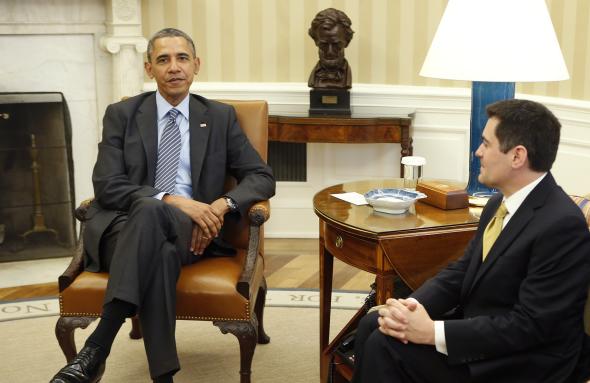

 Spencer, the “old guard” of the Religious Right, and others. Strangely, few if any of these evangelical leaders have looked in the mirror for answers. After all, despite being the leaders, they have failed to influence their followers. I argue here that evangelical intellectuals and leaders share the blame.

 You just keep going.” You reply, “Well, yes. But you will be perfectly happy. So what is the problem?” But a lack of propositional truth is not the problem. They will admit that there is something irrational or strange about it. But they cannot get a handle on it; they cannot resolve the problem. The continuous “going, going, going” of heaven is undesirable and even terrifying. Endlessness seems unbearable. The fear of heaven’s endlessness is the powerful sense, usually above clear articulation, of the nature of one’s own temporality in earthly life and the thought that such temporality continues into heavenly life.


 Reformation500